Altrio · 2024-2026
Building the other side of the marketplace
Altrio's investment platform was already used by three of the top four institutional investors globally. My mandate was to expand it and build an entirely new broker-facing product from the ground up.
Altrio builds software for institutional real estate investment. When I joined as VP Product, the platform — Origin — was already trusted by three of the five largest institutional investors in the world. My mandate was to take it further: expand the investor platform, and build an entirely new broker-facing product from the ground up.
I was the sole designer and product lead, working directly with a team of around seven engineers in ShapeUp cycles. There was no product function before me. I owned strategy, discovery, design, and delivery across the full product surface.
Alongside the broker work, I shipped a steady stream of enhancements to Origin's core investor experience: demographics data reporting for deals and assets, follow-up task management within the CRM, stage-locked fields to support structured investment workflows, improved sales comparables, and a long tail of quality-of-life improvements that made the platform more reliable and easier to use for the institutional clients who depended on it daily.
The bigger challenge, and the reason I was brought in, was building Altrio's broker tooling from scratch. The vision was a two-sided marketplace: investors on one side, brokers on the other. Nothing existed on the broker side yet.
We started with discovery. Dozens of interviews with brokers across firm sizes and deal types surfaced three things that shaped everything: their tools were completely disconnected, forcing constant manual updates across CRM, email, microsites, and data rooms; investors wanted structured data, not polished brochures; and deal-matching ran entirely on personal memory and rough notes.
The strategic insight was to build a connected system rather than another point solution. Competitors offered good individual tools that didn't talk to each other. We made the CRM the backbone, so that every action in microsites, data rooms, and email automatically updated contact and deal records. Over time, that accumulating data would let brokers match deals to the right counterparties by criteria rather than memory.
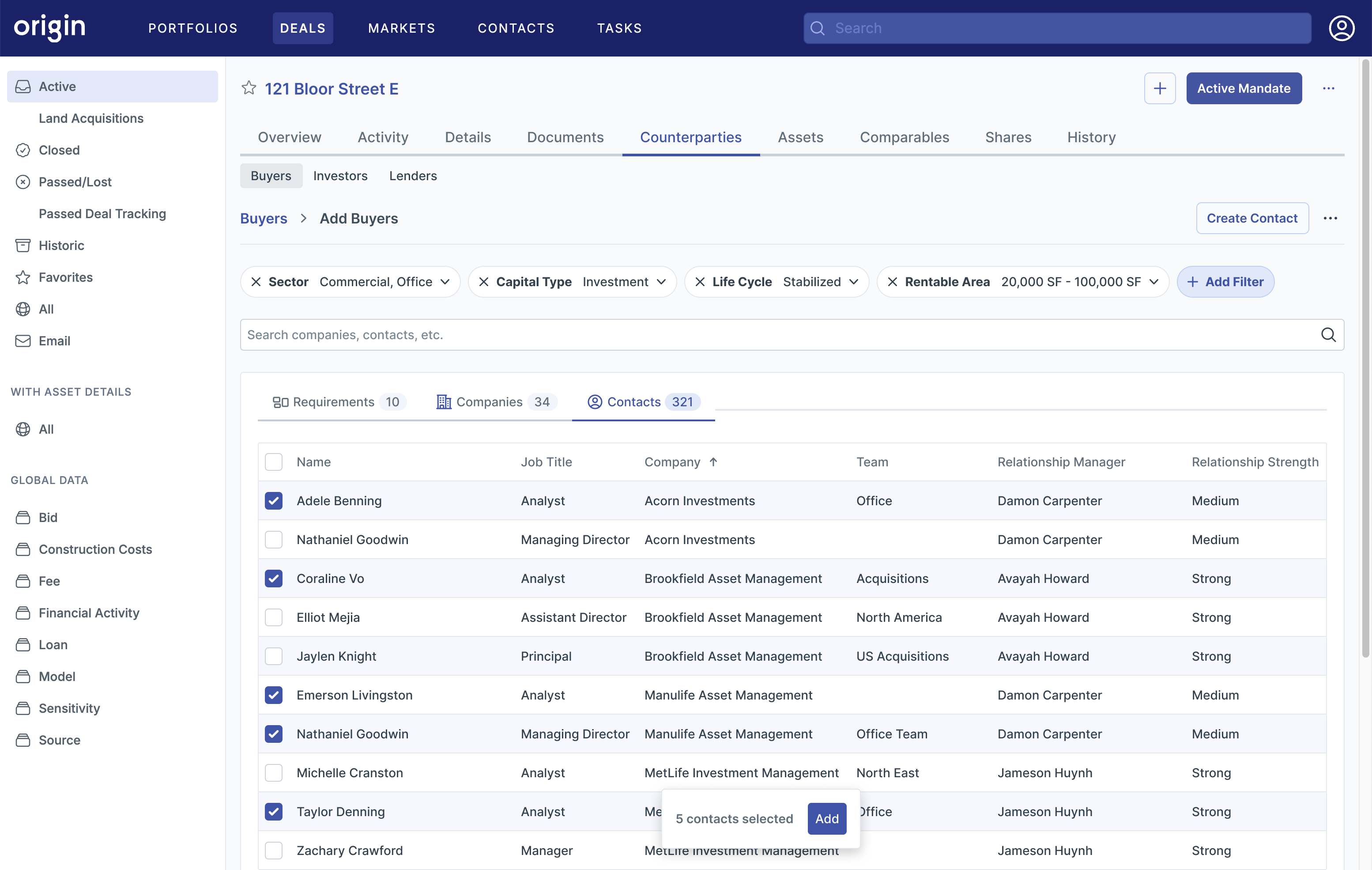
Counterparty requirements allow customers to maintain an accurate record of who's investing in what, and use those preferences to find deal leads.
The toolkit we shipped included deal microsites built from purpose-built blocks, data rooms with configurable CA workflows, counterparty requirement tracking that turned the CRM into a matching engine, and email marketing with engagement data feeding back into contact profiles. We sequenced the build deliberately, starting with what was closest to our existing strengths and ending with email where brokers already had substitutes.
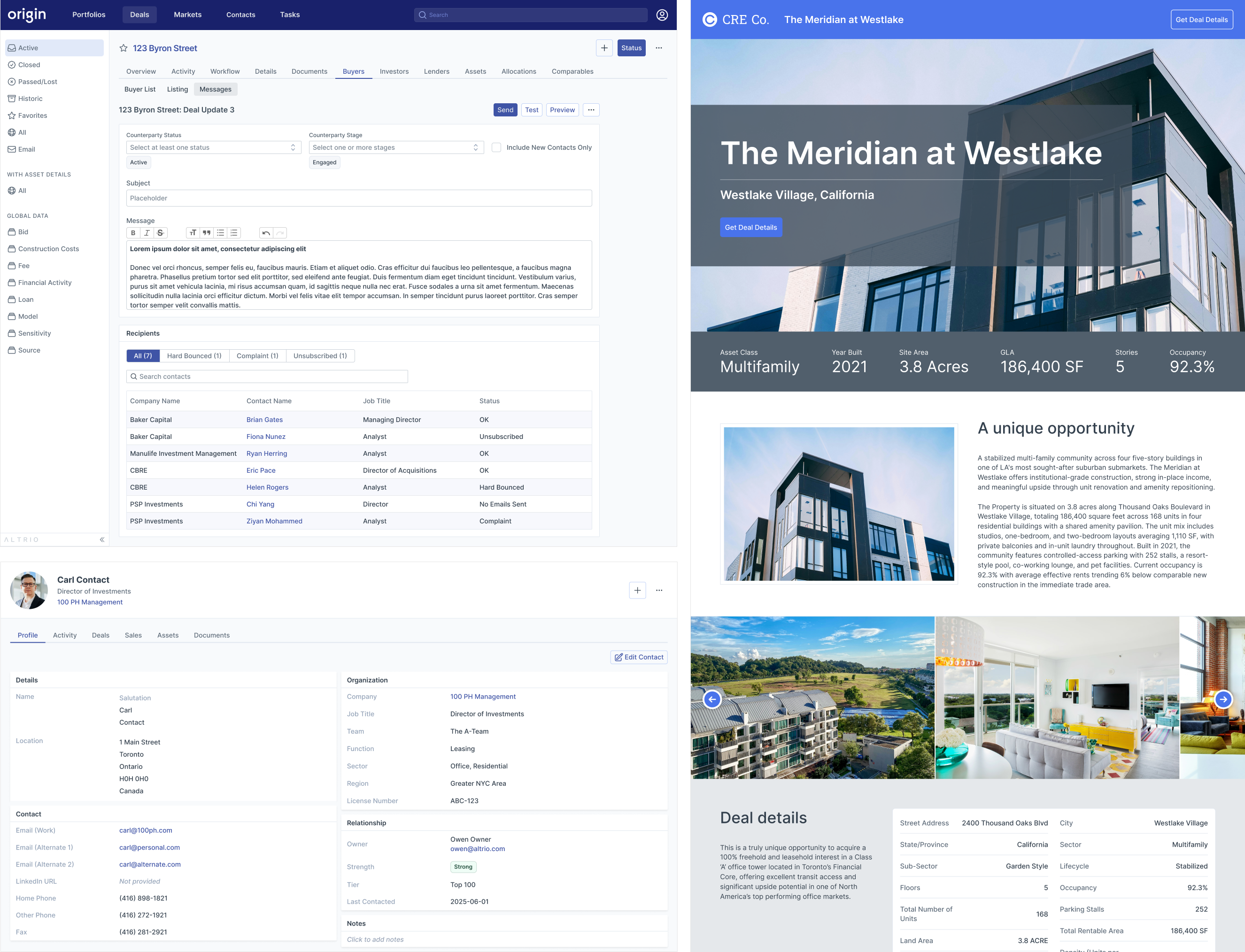
A full suite of broker tools were developed, including a microsite builder, an email marketing engine, data room manageement and more.
The full broker toolkit shipped in roughly a year. A first cohort of brokers was onboarded, opening the platform to an entirely new customer segment. Organizations that used the connected system end-to-end got consistent value. Those who treated it as a piecemeal set of tools were harder to retain, a pattern that became an important signal for the sales process.